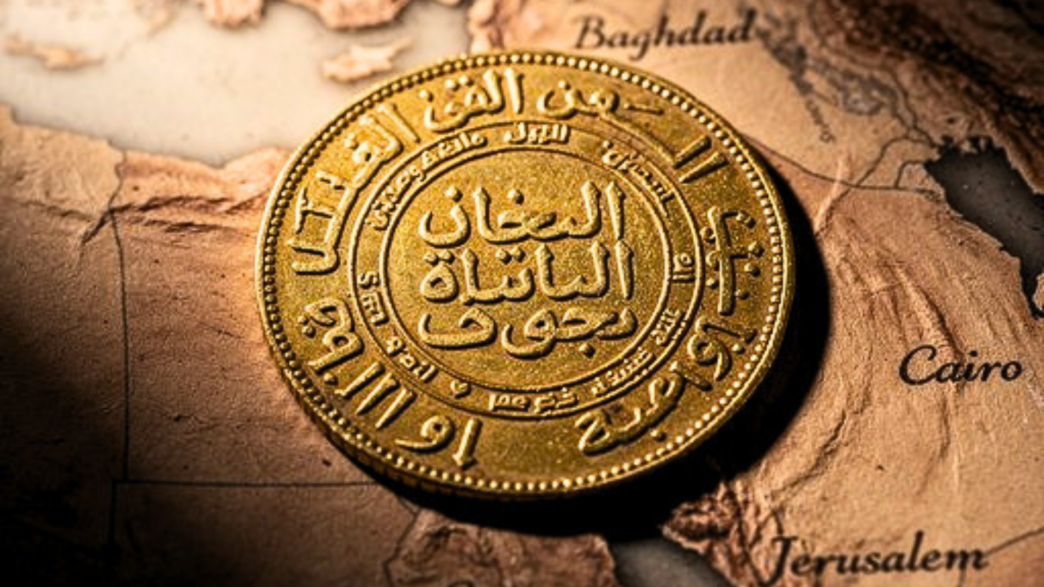
Long before the emergence of interest-based modern banking, stock exchanges, or multinational financial institutions, the Muslim world had already developed and demonstrated a sophisticated interest-free financial ecosystem capable of funding international trade, managing public wealth, financing entrepreneurs, and supporting social welfare.
From the bustling souks of Baghdad, Aleppo, and Damascus to the ports of Cairo, Zanzibar and Malacca, Islamic civilisation engineered interest-free financial mechanisms that allowed merchants to trade across continents while remaining anchored to the ethical principles of the Shariah. Rather than treating money as a commodity to be rented through interest, Islamic finance viewed wealth as a trust that should circulate through trade, investment, and productive enterprise.
Many of these instruments, developed more than a millennium ago, remain the intellectual and legal foundations of today’s US$4 trillion Islamic finance industry. 
Bait al-Mal: The World’s Early Public Treasury
The Bait al-Mal – literally the “House of Wealth”– served as the financial heart of the Islamic state. It functioned as a public treasury responsible for collecting revenues such as Zakat, Kharaj (land tax), Jizya, and other state income before redistributing them to society.
Unlike modern treasuries focused solely on fiscal administration, the Bait al-Mal was designed around social justice. Its mandate included supporting the poor, financing infrastructure, paying public servants, assisting widows and orphans, and maintaining public welfare.
During the reign of Caliph Umar ibn Al-Khattab (RA), the treasury financed roads, irrigation canals, and public services across the rapidly expanding Islamic state, establishing one of history’s earliest organised welfare systems.
Today, similar principles continue to influence public Islamic finance institutions. Countries such as Saudi Arabia, Malaysia, and Brunei maintain state-managed Zakat authorities that collect and redistribute wealth through structured welfare programmes. Malaysia’s state Zakat institutions, for example, channel billions of ringgit annually into education, healthcare, housing assistance and poverty alleviation, reflecting the enduring philosophy of the Bait al-Mal.
Mudaraba: Financing Entrepreneurs Through Partnership
Perhaps the most revolutionary contribution of Islamic finance was Mudaraba, a profit-sharing partnership between capital and expertise.
Under this arrangement, one party supplied all the capital while the entrepreneur contributed management, labour and commercial expertise. If the venture generated profits, both parties shared them according to an agreed ratio. If the business failed without negligence, the investor bore the financial loss while the entrepreneur lost only the time and effort invested.
This shifted finance away from guaranteed returns towards genuine entrepreneurial risk-sharing.
Historically, this model financed caravans travelling from Makkah to Syria, Yemen and beyond. Many historians note that before Prophethood, Prophet Muhammad ﷺ himself managed trade expeditions under a Mudaraba arrangement on behalf of Sayyidah Khadijah (RA), demonstrating the practical application of ethical partnership centuries before modern venture capital.
Today, Mudaraba remains widely used across Malaysia, Bahrain, and the United Arab Emirates, particularly in Islamic investment funds, savings accounts, and private equity structures, where investors and fund managers share profits instead of guaranteeing fixed interest returns.
Musharaka: Shared Ownership and Shared Responsibility
While Mudaraba separates capital from management, Musharaka requires every partner to invest capital into the venture.
Profits are distributed according to mutually agreed ratios, while losses are shared strictly in proportion to each partner’s financial contribution. This creates strong alignment between investors because every participant shares both opportunity and risk.
Historically, Musharaka financed agricultural production, manufacturing workshops, and long-distance trading partnerships across the Abbasid and Ottoman worlds.
Today, Islamic banks have introduced diminishing Musharaka structures, which are increasingly used in Pakistan, Malaysia, and several Gulf countries for Islamic home financing. Instead of lending money to purchase property, the bank and customer jointly own the asset, with the customer gradually buying the bank’s share until full ownership is achieved; however, it is not clearly Halal. The clauses are 100% in favour of the bank while leaving the buyer stranded in multiple clauses. This forfeits the basics of Islamic finance of shared gains and joint risk sharing.
Hawala: The Trust-Based Global Payment Network
Centuries before SWIFT, international wire transfers or digital banking, Muslim merchants had already developed one of history’s most sophisticated payment systems: Hawala.
A trader in Baghdad could deposit money with a trusted broker, receive a written instruction, and have another broker in Cairo, Delhi or Samarkand release the equivalent funds to the intended recipient, without physically transporting gold or silver across dangerous trade routes.
The system relied entirely on reputation, trust and established commercial relationships, dramatically reducing the risks of theft while accelerating international commerce.
Although Hawala continues to operate informally in parts of South Asia, the Middle East and East Africa, regulated financial institutions have adopted many of its underlying principles through modern remittance systems designed to facilitate low-cost cross-border transfers while complying with financial regulations.
Sakk: The Precursor to Modern Cheques and Sukuk
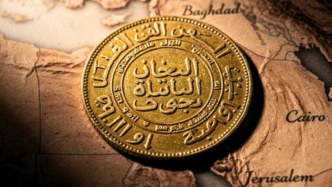
In the 9th century, Muslim merchants had successfully established the practice of Sakk, which later was adopted by the English language as the word “cheque.”
Rather than carrying large quantities of gold, merchants could present a written payment instruction redeemable in another city, greatly improving commercial security.
The same legal philosophy eventually evolved into today’s Sukuk, often described as Islamic bonds—although they are fundamentally asset-backed investment certificates rather than debt instruments.
Modern Sukuk now finance airports, highways, renewable energy projects, hospitals, and public infrastructure across the Muslim world.
Malaysia has become the world’s largest Sukuk market. At the same time, Saudi Arabia’s Vision 2030, the United Arab Emirates, Indonesia, and even non-Muslim jurisdictions such as the United Kingdom and Luxembourg have successfully issued Sukuk to attract global Islamic capital.
Cash Waqf: Sustainable Philanthropy Through Investment
Among the Ottoman Empire’s greatest financial innovations was the Cash Waqf.
Instead of donating land or buildings, benefactors endowed cash that was professionally invested. The investment returns funded schools, hospitals, libraries, water systems, scholarships, and Qard al-Hasan – interest-free loans for small businesses and families facing hardship.
Unlike one-time charity, Cash Waqf created perpetual social impact through self-sustaining investment income.
Today, Türkiye, Malaysia, and Indonesia are reviving Cash Waqf as a strategic tool for national development. Malaysia has introduced corporate Waqf initiatives supporting healthcare and education. At the same time, Indonesia has pioneered Cash Waqf Linked Sukuk, allowing charitable funds to finance public development projects while generating continuous social benefits.
Murabahah: Ethical Trade-Based Financing
Perhaps the most widely recognised instrument in contemporary Islamic banking is Murabahah.
Rather than lending money to purchase an asset, the financial institution first acquires ownership of the asset before selling it to the customer at a clearly disclosed markup payable over an agreed period.
Every stage of the transaction is transparent, with both parties fully aware of the acquisition cost and profit margin.
Murabahah is now extensively used throughout the United Arab Emirates, Saudi Arabia, Qatar, Malaysia, and Bahrain for vehicle financing, equipment purchases, business expansion, and trade finance.
Although some critics argue that excessive dependence on Murabahah makes Islamic banking resemble conventional lending, its contractual foundation remains based on genuine asset ownership and commercial trade rather than interest-bearing debt.
An Islamic Financial System Built on Real Economic Activity
Collectively, these seven mechanisms enabled Muslim merchants to establish one of history’s largest interconnected trading networks, stretching from Al-Andalus in Spain to China, East Africa, Central Asia and the Indian Ocean.
More importantly, they embedded principles that remain remarkably relevant today: risk-sharing instead of risk transfer, investment instead of speculation, asset-backed financing instead of unsecured debt, transparency instead of uncertainty, and social responsibility alongside commercial success.
As governments across the Gulf, Southeast Asia and parts of Africa seek alternatives to highly leveraged financial systems, these classical Islamic instruments are no longer viewed merely as historical artefacts. They are increasingly recognised as practical frameworks for building resilient, ethical and inclusive economies in the twenty-first century.
Far from being relics of medieval commerce, these instruments demonstrate that Islamic finance was never simply about prohibiting interest. It was about designing an economic system where finance serves society, wealth circulates productively, and prosperity is shared rather than extracted.
A bigger question every muslim must collectively think about?
Was the decline of Islamic finance simply the result of economic evolution, or was it the systematic replacement of an alternative financial order?
Many would argue it was no accident. As colonial powers expanded across Muslim lands, they did not merely occupy territories; they dismantled indigenous legal, commercial and monetary institutions, and replaced them with Western banking models built on interest, sovereign debt and centralised monetary control. Financial dominance became an instrument of geopolitical power.
The transition from commodity-backed money to fiat currencies, coupled with the emergence of a handful of dominant reserve currencies, fundamentally reshaped the global financial order. Control over money creation, international lending and cross-border payments increasingly rested with institutions and economies that dictated the rules of global commerce.
From this perspective, the marginalisation of Islamic financial principles was not an unintended consequence of modernisation but part of a broader restructuring of economic power. Once control over capital was consolidated, the rules of finance followed. As the adage suggests, those who control the money rarely need to control anything else – they write the rules everyone else must live by.