For the past three years, governments across the world have been racing to build artificial intelligence ecosystems, sovereign cloud infrastructure, semiconductor capabilities and national data centres. Trillions of dollars are being committed to technologies that promise to define the next digital revolution. Yet many face mounting threats in their infancy, jeopardising their long-term survival, including public pushback, conflict over natural resources, and funding constraints. To say the least, AI may shape the future of architecture, but seeds will decide whether we survive or die.
The issue becomes significantly more alarming when the Islamic world has rightly recognised the importance of digital sovereignty, whereas there is little to no discussion about climate change, food safety and agricultural sovereignty. Countries such as Saudi Arabia, the United Arab Emirates, Qatar and Malaysia are investing heavily in AI, smart cities and digital transformation. Others, including Pakistan, are beginning to appreciate that data has become a strategic asset.
Yet amid this technological race, an equally important question remains largely ignored. 
Who controls the seeds that feed the world?
History has repeatedly demonstrated that nations do not lose their sovereignty only through military defeat. They also lose it when they become dependent on others for energy, technology, medicine or food. While the world debates artificial intelligence, a quieter struggle over agricultural sovereignty has been unfolding for decades.
Food security begins with seeds. Whoever safeguards agricultural biodiversity safeguards civilisation itself.
Why Seed Sovereignty Is Critical to the Future of the Islamic World?
Seeds are not merely agricultural inputs. They are strategic national assets.
Every crop, every harvest and every nation’s food supply depends upon preserving the genetic diversity that enables agriculture to adapt to changing climates, new diseases and shifting environmental conditions.
This is precisely why countries invest in seed banks and genetic repositories. These facilities preserve thousands of plant varieties that may one day become essential for feeding future generations.
When drought destroys one variety, another may possess the resilience required to survive.
When disease wipes out commercial crops, traditional varieties often provide the genetic material needed to rebuild food production.
Seed vaults are therefore not museums. They are insurance policies for humanity.
How Western Nations Are Securing Their Agricultural Future?
Perhaps the most recognised example is Norway’s Svalbard Global Seed Vault, often referred to as the world’s “doomsday seed vault”. Located deep within the Arctic permafrost, it stores duplicate seed samples from gene banks across the globe as a safeguard against natural disasters, war and climate change.
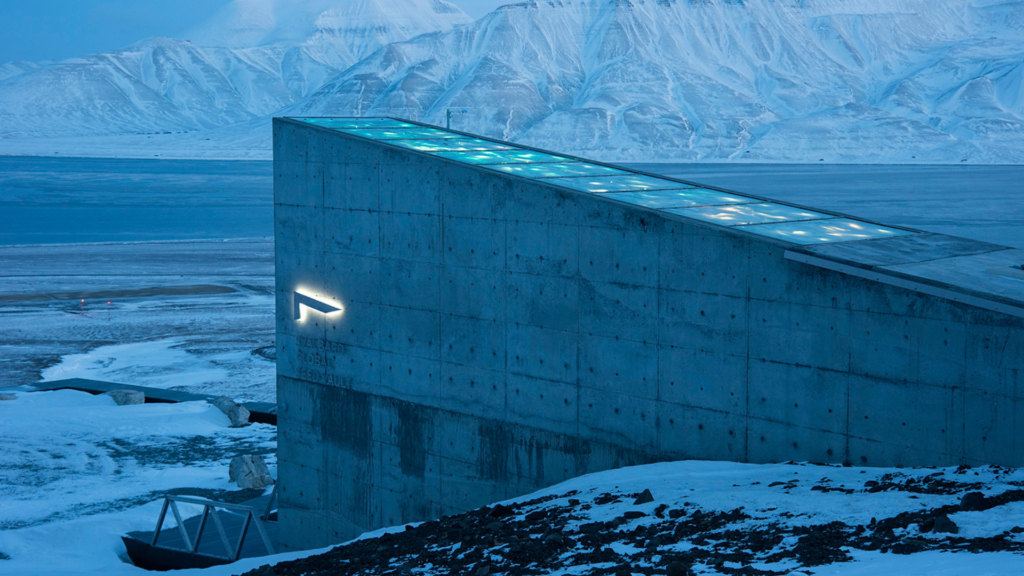
Alongside Norway, countries such as the United States, China, India, Russia, Japan, South Korea, Germany and several European nations maintain extensive national gene banks and agricultural research programmes dedicated to preserving crop diversity.
Have a look at how developed countries have been preparing for seed vaults for ages:
| Country | Seed Bank / Gene Bank | Established | Estimated Capacity | Diversity Preserved | Strategic Importance |
| Norway | Svalbard Global Seed Vault | 2008 | 1.4+ million seed samples (capacity around 4.5 million samples) | Over 6,200 plant species represented | Global backup facility storing duplicate samples from gene banks worldwide. |
| United States | National Plant Germplasm System (NPGS) | 1898 (modern system expanded significantly after 1950s) | ~600,000+ accessions | Crops, wild relatives, medicinal plants, vegetables, grains, and fruit genetics | One of the world’s largest national collections and a major source for agricultural research. |
| Russia | Vavilov Institute of Plant Genetic Resources (VIR) | 1921–1924 | 300,000+ accessions (historically among the world’s largest collections) | Thousands of crop species and traditional varieties | One of the oldest agricultural biodiversity collections in the world. |
| India | ICAR National Genebank (NBPGR) | 1996 (National Genebank facility inaugurated) | 474,000+ seed accessions + cryogenic collections | More than 2,100 plant species | One of the largest collections globally, preserving rice, wheat, pulses, oilseeds, vegetables, spices and medicinal plants. |
| China | National Crop Genebank / Chinese Academy of Agricultural Sciences | 1980s–1990s (modern national infrastructure expanded later) | 500,000+ accessions (among world’s largest collections) | Rice, wheat, maize, soybeans and other strategic crops | One of the world’s largest agricultural genetic resource programmes. |
| Germany | IPK Gatersleben Gene Bank | 1943 (roots in plant breeding collections) | 150,000+ accessions | Cereals, legumes and agricultural crops | One of Europe’s largest plant genetic resource collections. |
| Japan | NIAS Genebank | 1980s–1990s | 200,000+ accessions | Rice, vegetables, crops and microorganisms | Major Asian agricultural biodiversity repository. |
| South Korea | National Agrobiodiversity Center | 1980s onwards | 200,000+ accessions | Rice, vegetables, medicinal plants and native crops | Important East Asian agricultural conservation centre. |
| Australia | Australian Grains Genebank | 2010 | 100,000+ accessions | Wheat, barley, pulses and grain crops | Critical for climate-resilient agriculture research. |
The question that deserves greater attention is this:
Where does the Islamic world stand in achieving agricultural sovereignty?
Several Muslim-majority nations have made meaningful progress. Türkiye operates one of the region’s most advanced national seed gene banks. Iran maintains significant plant genetic resource collections. Pakistan preserves indigenous crop varieties through the National Agricultural Research Centre. International agricultural research institutions operating across West Asia and North Africa have also played a vital role in conserving crops adapted to dry climates.
These initiatives deserve recognition.
Yet compared with the scale of investment flowing into artificial intelligence, sovereign wealth funds and mega infrastructure projects, agricultural genetic security receives remarkably little political attention.
Food sovereignty should command the same strategic urgency as digital sovereignty.
The Global Seed Industry’s Quiet Shift Towards Consolidation
Another development deserves careful consideration.
Over recent decades, the commercial seed industry has undergone significant consolidation. Today, a relatively small number of multinational companies account for a substantial share of the global commercial seed market based on Genetically Modified Organisms. These GMO seeds contain multiple environmental issues, and the debate continues regarding the indirect environmental repercussions and the economic pressures that heavily influence how countries choose their seeds.
Alongside this consolidation has come an expansion of intellectual property protections, including patents and plant breeders’ rights. Certain commercial seed varieties, particularly some genetically modified and proprietary hybrids, are sold under licence agreements that often restrict farmers from saving and replanting harvested seed.
Supporters argue that these protections are necessary to reward innovation, recover research investment and encourage the development of higher-yielding, disease-resistant crops.
Critics counter that the increasing concentration of ownership and the widespread use of licensing agreements can reduce farmer autonomy, increase dependence on commercial suppliers and place greater control over agricultural genetics in fewer hands.
Regardless of where one stands in that debate, one fact remains difficult to ignore.
The resilience of any nation improves when it can preserve and develop its own agricultural resources rather than relying exclusively on external supply chains.
Food Dependency Is Strategic Survival Dependency
Recent history offers numerous reminders.
The COVID-19 pandemic disrupted global supply chains.
The conflict in Ukraine exposed vulnerabilities in grain exports and fertiliser markets.
Climate change continues to reduce agricultural productivity in many regions.
Export restrictions imposed during crises have demonstrated that even friendly nations prioritise their own populations when food becomes scarce.
These events are not theoretical warnings. They are strategic lessons.
Every nation now understands the importance of energy independence.
Increasingly, governments are recognising the importance of digital independence.
The next frontier is agricultural independence.
Questions Muslim Leaders Should Be Asking
If the Islamic world is serious about long-term sovereignty, several difficult questions deserve honest answers.
- How many indigenous crop varieties have already disappeared?
- How many national seed banks possess sufficient funding and scientific expertise?
- How many agricultural geneticists are being trained across Muslim-majority countries?
- How dependent are national food systems on imported commercial seed?
- Do our governments treat agricultural biodiversity as critical national infrastructure?
- Most importantly, if global trade were interrupted for a prolonged period, could our nations maintain food production using locally preserved genetic resources?
These are not hypothetical questions. They are questions of national resilience.
Beyond AI: Building Two Pillars of Sovereignty
Artificial intelligence will undoubtedly transform economies.
Data centres will become critical infrastructure.
Digital sovereignty is essential.
But data cannot replace food.
Algorithms cannot grow wheat.
Cloud computing cannot preserve disappearing crop varieties.
The nations that will thrive during the coming century will not simply be those with the most advanced AI models. They will be those capable of protecting both their digital assets and the biological foundations of their food systems.
For the Islamic world, this should not be viewed as a choice between technology and agriculture.
It is a call to pursue both with equal determination.
A Strategic Agenda for the Islamic World
Imagine a collaborative network of seed vaults stretching from Morocco to Indonesia.
Imagine researchers across Pakistan, Türkiye, Saudi Arabia, Malaysia, Egypt, Kazakhstan, Nigeria and Indonesia working together to preserve drought-resistant crops, heritage grains and indigenous fruit varieties uniquely adapted to their climates.
Imagine the Organisation of Islamic Cooperation establishing a coordinated programme for agricultural genetic security comparable in ambition to regional digital infrastructure initiatives.
Such cooperation would strengthen food security, encourage scientific collaboration and preserve agricultural heritage for future generations.
The Islamic Golden Age produced remarkable advances in irrigation, crop cultivation and agricultural science. That legacy should inspire a renewed commitment to safeguarding the genetic resources upon which future harvests depend.
The Harvest of the Future Begins Today
The twenty-first century will be remembered not only for artificial intelligence but also for how nations responded to growing challenges in food security, biodiversity and climate resilience.
The countries that protect their seeds today will shape the harvests of tomorrow.
Muslim nations have rightly begun investing in digital sovereignty.
Now they must give equal strategic importance to agricultural sovereignty.
Because sovereignty does not begin in the cloud.
It begins in the soil.
And the future of civilisation may ultimately depend on something far smaller than a microchip—a seed.
If the Islamic world can invest billions in artificial intelligence, smart cities and sovereign data centres, why can’t 57 Muslim nations jointly establish the world’s largest seed vault? The civilisation that once transformed agriculture during the Islamic Golden Age should not become dependent on others for the very seeds that sustain its future.