Have you noticed how everything today seems to come in extremes? Hustle harder. Detox harder. Optimise your sleep, your food, your work, your mind. These days, “enough” is rarely enough. Even balance has become a trend you must master, track, and post about.
The numbers clearly reflect this shift. About 36% workers worldwide now work more than 48 hours per week, which has been directly linked to stress and health decline. At the same time, 77% of professionals report burnout at some stage of their careers, mostly due to long hours and constant pressure, according to global workplace surveys by Deloitte and Gallup.
This constant push creates a quiet contradiction within the inner-self and external facade. Despite an increase in tools, knowledge, and convenience, many people still feel tired, distracted, and stretched thin. This is where a moderate lifestyle stops sounding philosophical and starts sounding practically logical. 
In Islam, balance in life is not an optional piece of advice. It is a way of living. Rooted in the concepts of mizan – means a calibrated system of balance governed by limits and the rejection of israf, which means excess that crosses the line of need and balance, moderation offers a steady path through a world that keeps swinging from one extreme to another.
In Islam, balance in everything we do is clearly addressed and recommended as A‘itidāl – moderation, balance, equilibrium. It sits quietly at the heart of a genuinely happy Islamic life.
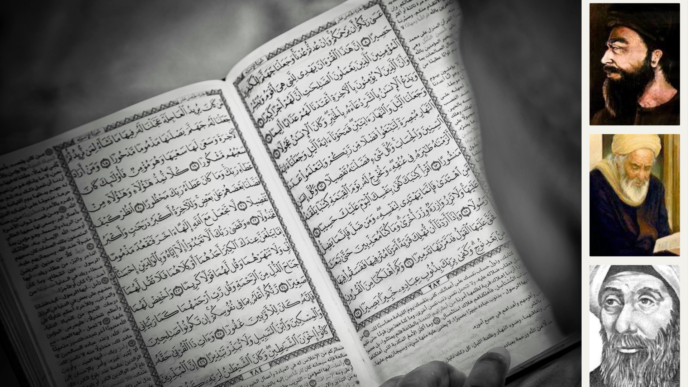
Islam discourages extremes. The Qur’an describes the Ummah as “Ummatan Wasatan”, a middle, balanced nation (Qur’an 2:143).
This “middle” isn’t mediocrity; it’s stability. A‘itidāl protects a person from the emotional whiplash that comes from living at the edges, burnout, guilt, arrogance, and regret.
Happiness, in this sense, isn’t a spike. It’s a steady state.
Why Extremes Feel Normal Now
Extreme living did not appear overnight. It was engineered quietly and efficiently by a system that rewards excess and punishes enough. Modern Capitalism, in its late-stage form, does not thrive on balance; it thrives on acceleration. Growth must be constant. Consumption must expand. Contentment is economically useless.
Remote work erased office hours. Social media turned productivity into performance. Even rest is now monetised. Sleep is tracked. Steps are counted. Downtime must justify itself by improving future output. According to the Organisation for Economic Co-operation and Development (OECD), employees in developed economies work 15–20% longer hours than they did three decades ago, while the World Health Organisation (WHO) links long working hours to 745,000 deaths annually from heart disease and stroke. Burnout is no longer a failure; it is a by-product.
This is how extremism becomes cultural. Work hard or be irrelevant. Consume more or fall behind. Optimise everything or feel inadequate. Excess looks normal; balance feels lazy.
Islam takes a fundamentally different view. It recognises effort, but it also recognises limits. The Qur’an describes the universe itself as created with mizan, a precise balance. When humans violate that balance, the cost appears predictably: in health, in finances, in relationships. Not instantly, but cumulatively. The damage builds quietly, then arrives all at once.
Mizan as a Daily Framework
Mizan is not abstract. It applies to ordinary days.
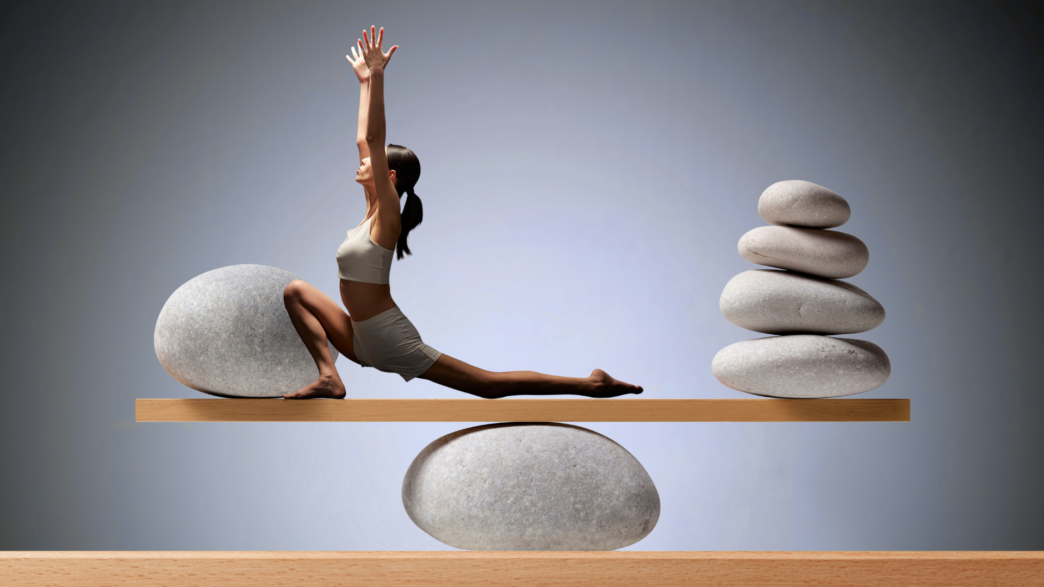
Balance does not mean equal time for everything. It means the appropriate time. Work has a place. Rest has a place. Worship has a place. Family has a place. When one area consumes all the space, imbalance follows. This is why people often feel busy but strangely unfulfilled.
This is also why balance in life feels calming when practised. It removes the constant pressure to overdo everything. You are no longer trying to win at life. You are trying to live it well.
A simple way to apply mizan is to pause before committing and ask one question. Does this add stability, or does it quietly drain it?
Israf and the Quiet Damage of Excess
Israf is often misunderstood as wasteful spending. In reality, it is broader. It includes excess effort, excess consumption, and excess self-pressure.
Let’s just consider the food delivery culture. Food comes to the doorstep in a few clicks. Ordering more than needed feels harmless. It is convenient. Yet repeated excess leads to waste, financial strain, and unhealthy eating habits. Islam discourages this not to restrict pleasure, but to protect dignity and sustainability.
This applies beyond food.
- Endless scrolling that drains focus
- Overworking that damages health
- Self-improvement plans that never rest
All of these fall under israf when they exceed necessity. The real issue is not indulgence once in a while. It is normalising ‘excess’ as a way of living.
Moderation at Work without Losing Drive
Work remains central to modern identity. But an extreme work culture has consequences.
A large study published in The Lancet found that people working 55 hours or more per week had a significantly higher risk of stroke and heart disease. The World Health Organization later classified overwork as a global health risk. These are not abstract findings. They reflect everyday routines that quietly push people past healthy limits.
Islam values work. It also values preservation of the self. A moderate lifestyle reframes productivity. It favours consistency over exhaustion. Showing up steadily often achieves more than intense bursts followed by burnout.
Practical ways to apply this include:
- Setting clear work cut-off times
- Avoiding multitasking as a badge of honour
- Treating rest as a responsibility, not a reward
This creates balance in life without sacrificing progress.
Self-Improvement without Self-Punishment
Self-improvement dominates modern culture. Improve your habits. Improve your mindset. Improve faster. Improve publicly.
The irony is hard to miss. Chasing improvement often creates dissatisfaction. There is always another metric to fix. Another routine to master. Another version of yourself to chase.
Islamic teachings promote steady refinement of character, not perfection. Progress is meant to support life, not consume it. A moderate lifestyle allows growth to happen without guilt. It accepts human limits while still encouraging effort.
Helpful practices include:
- Choosing one habit at a time
- Measuring progress monthly, not daily
- Accepting pauses as part of growth
This approach protects motivation and prevents burnout.
Worship and Balance in Spiritual Practice
Even spirituality has limits in Islam. Excessive worship that disturbs family life or health is discouraged. Faith is meant to integrate into daily living, not pull a person away from it.
This reinforces balance in life as a spiritual principle, not just a lifestyle choice. Worship remains sustainable when it fits naturally into routine. Moderation protects sincerity and prevents spiritual fatigue.
Why Moderation Matters More Than Ever
Moderation feels uncomfortable today because extremes are loud. They trend well. They perform better online.
Choosing restraint in spending, boundaries at work, or slower growth can look like falling behind. Yet many of the pressures people now struggle with are not personal failures. They are responses to environments that reward excess.
Moderation in life, Islamically known as A‘itidāl, teaches:
- Consume what benefits you
- Desire what elevates you
- Ignore what enslaves you
The Qur’an repeatedly condemns isrāf (excess), not enjoyment. When desires are moderated, they stop owning you. That freedom is deeply calming.
This is where moderation connects closely with how we understand stress. When life becomes unbalanced, stress often shows up as a signal, not a defect. Treating stress without examining the excess can miss the real cause. As explored in Are We Medicalising Stress Instead of Understanding It?, pressure is often framed as something inside the individual, rather than a response to unrealistic demands and constant overload.
A moderate lifestyle grounded in mizan and free from israf addresses that root problem. It reduces the need to constantly manage stress by reducing what creates it in the first place.
Moderation does not shrink life. It steadies it. And in a world built on extremes, choosing balance is not passive. It is quietly powerful.