The festive season is fading, yet one experience has stayed with me—long after the lights dimmed and the music stopped. I’m writing this not to judge, but to offer a perspective and perhaps gently spark a new line of thought on modern parenting.
It was December 24th, late in the afternoon. I walked into one of the city’s most well-known toy stores, and just like every other time of the year, I noticed it instantly.
Rows of pink. Glossy boxes. Perfect hair. Perfect waist. Perfect smile. 
And somewhere between those shelves, parents, or let’s say adults, often with the best intentions, are telling their daughters: “Look, she’s just like you.”
But is she?
As I moved closer, as I myself was browsing for gifts, I noticed a woman, presumably the girl’s mother, holding up a Barbie while helping her daughter choose a toy.
The oddity of the oddest wasn’t the product – but the claim – Look, she’s just like you!
This isn’t an anti-Barbie rant. It’s a pause. A question we rarely ask while celebrating plastic perfection.
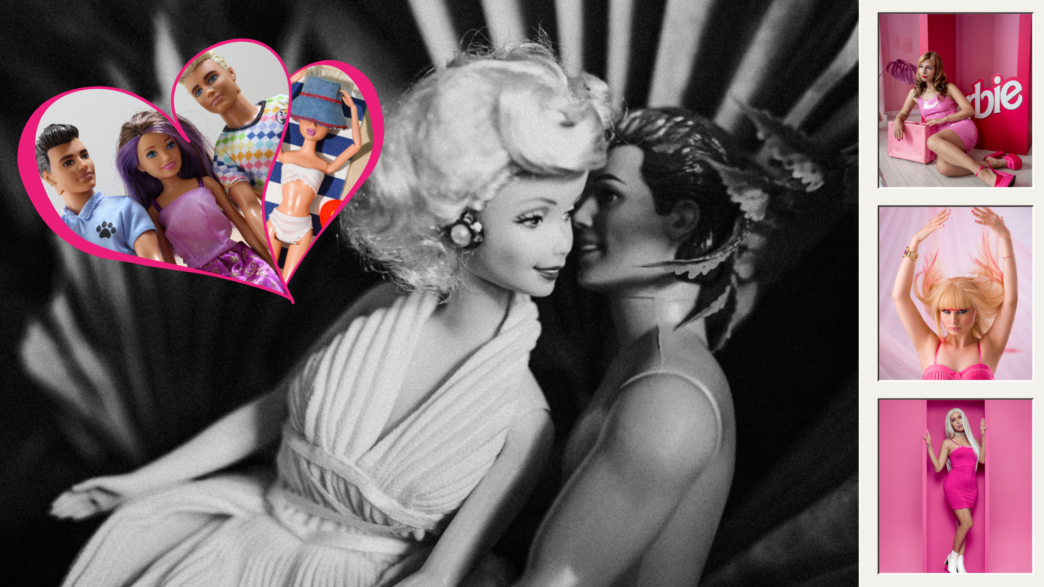
Because Barbie isn’t just a toy, she’s a story! One that’s been quietly shaping how girls see themselves for decades.
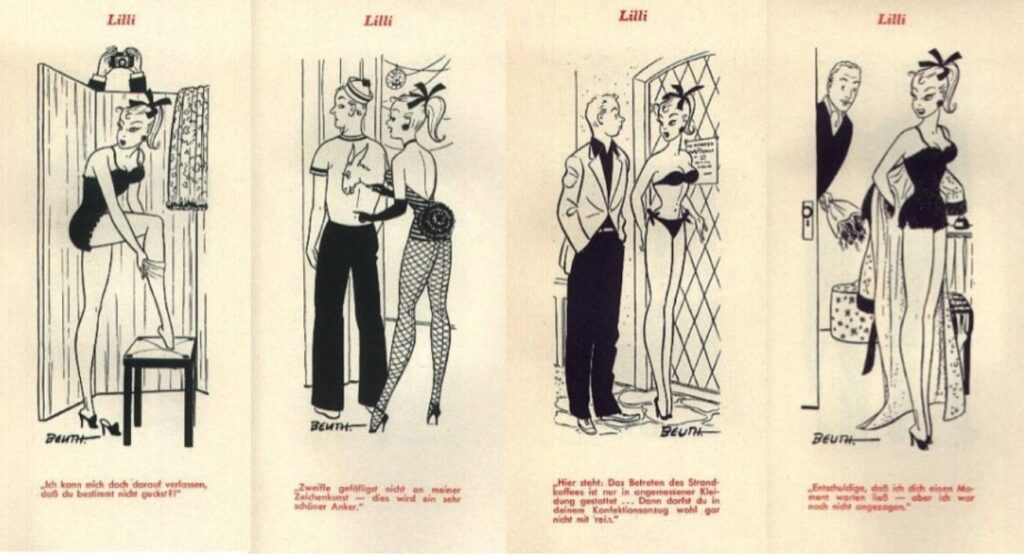
When Barbie was introduced in 1959, she wasn’t designed to represent childhood. She was inspired by a German doll called Bild Lilli, created in the 1950s based on a newspaper comic character. Lilli was not designed for children. She was a caricature of an adult woman—sexualised, transactional, and marketed primarily to men as a novelty item. The doll was sold in bars, tobacco shops, and adult stores, often as a gag gift.
In the comic strips, Lilli navigated life through charm, manipulation, and male attention. She wasn’t criminal in a courtroom sense, but she existed in a moral grey zone, portrayed as someone who leveraged sexuality and social power to survive and advance. That undertone mattered. It shaped the visual language that would later be repackaged as “aspirational.”
She was designed to represent adulthood, specifically, an idealised, stylised, highly curated version of it. Her body proportions with bulging breasts, red pluckered lips, blue eyes, and slim waistline made up for a night on the town were never humanly realistic. Her value, at least initially, was tied to her appearance rather than her capability. The message was subtle but consistent: this is what “winning” looks like.
When the concept was brought to the United States, the adult context was stripped away, but the aesthetic remained. The exaggerated body. The fixed smile. The silent suggestion that desirability equals power.
And that’s the uncomfortable part.
In a 1977 interview with The New York Times, Ruth Handler, the owner of the brand stated, “Every little girl needed a doll through which to project herself into her dream of her future.”
She went further, explicitly linking that “dream” to adolescent sexuality and physical maturity. “If she was going to do role playing of what she would be like when she was 16 or 17, it was a little stupid to play with a doll that had a flat chest”.
Imagine the psychological dismantling at play here.
A brand owner who deliberately introduced a doll for little girls was fully aware that it represented an adult body and an adolescent ideal, still chose to overlook the psychological consequences it would imprint on millions of young, impressionable minds.
This was not accidental. It was not naïveté. It was a conscious design decision.
The doll was engineered as a projection of who a girl should become, long before she had the cognitive maturity to separate imagination from expectation. In doing so, the brand normalised the idea that physical development, desirability, and adulthood were not just future possibilities but benchmarks to aspire to early.
When a product repeatedly reinforces a narrow vision of beauty and maturity during formative years, it doesn’t merely entertain. It conditions. It calibrates self-worth. It quietly teaches comparison before self-understanding has a chance to form.
This is where the damage isn’t loud but lasting.
And perhaps the most unsettling part is not that the impact was unforeseen, but that it was deemed acceptable collateral in the pursuit of an aspirational ideal that sold.
Over time, Barbie evolved. Careers were added. Diversity was introduced. Narratives were patched. But the foundation and visual language of perfection never really disappeared. Even today, empowerment is often wrapped in flawless aesthetics.
And that’s where the quiet damage begins.
Children don’t process toys intellectually. They absorb them symbolically. A doll isn’t just something they play with—it becomes a mirror, a reference point, a silent teacher. When a girl repeatedly sees admiration, beauty, and success packaged in one narrow form, she doesn’t consciously compare herself. She calibrates herself.
- Without words.
- Without intention.
- Without consent.
The concern isn’t that Barbie exists. The concern is children’s obsession without context.
Repetition without conversation.
We say we want our daughters to be confident, grounded, and self-aware. Yet we often hand them ideals that equate worth with symmetry, thinness, and visual approval, then act surprised when insecurity shows up early.
What if the question isn’t “What toy is she playing with?”
But “What story is this toy telling her again and again?”
Because stories shape identity long before logic kicks in.
This isn’t about banning dolls or policing childhood joy. It’s about awareness. Balance. Narrative diversity. Let Barbie be one character in the room, not the standard everyone else must measure up to.
The issue, then, isn’t Barbie herself. It’s the absence of narrative literacy around her.
If we’re going to celebrate empowerment, we should also be willing to acknowledge origins. If we’re going to place symbols into the lives of young girls, we owe them and ourselves the full story! We must allow our girls to know, understand, and decide for themselves.
Awareness doesn’t ruin childhood. Silence does.
Give girls stories where courage looks different – where intelligence isn’t accessorised. Where bodies aren’t the primary headline. Where imagination isn’t pre-filtered by perfection.
And maybe just maybe, we should stop asking girls to see themselves in Barbie, and start helping them see themselves as enough, long before comparison enters the picture.
That shift doesn’t start with children.
It starts with us as parents, guardians, mentors, and communities!