Just days after the Pakistan Air Force announced a successful flight test of its indigenously developed Taimoor weapon system, the country’s naval arm has delivered a parallel signal: Pakistan’s defence posture is increasingly centred on layered deterrence, indigenous capability, and unmanned warfare.
Pakistan Signals a Shift Toward Networked Naval Warfare
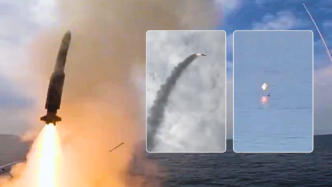
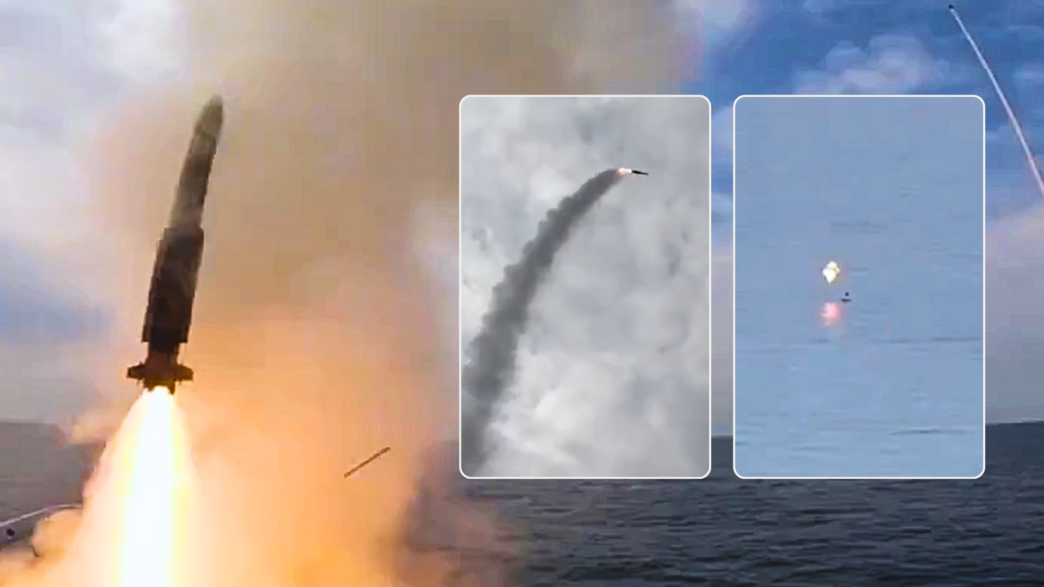
During a naval exercise in the North Arabian Sea, the Pakistan Navy successfully test-fired a surface-to-air missile, underscoring what military planners describe as a rapid evolution in maritime air defence. According to the military’s media wing, Inter-Services Public Relations (ISPR), the exercise was designed not merely as a demonstration of firepower but as validation of an integrated naval warfare framework that blends conventional platforms with unmanned systems.
Extending the Pakistan Navy’s Air Defence Envelope
At the core of the exercise was the live firing of the LY-80(N) surface-to-air missile from a vertical launching system at extended range. The missile successfully engaged and neutralised an aerial target, confirming the Pakistan Navy’s growing ability to defend high-value assets against airborne threats across longer distances. 
The test reflects a strategic emphasis on sea-based air denial at a time when naval theatres are becoming increasingly contested and technologically dense. For Pakistan, whose maritime security concerns span both coastal defence and strategic sea lanes, the successful demonstration of long-range air defence marks a notable expansion of operational depth.
ISPR framed the launch as evidence of the Navy’s “advanced air defence systems,” a phrase that signals more than a single weapons test. It points to a broader effort to integrate sensors, launch platforms, and command systems into a cohesive defensive shield.
Unmanned Warfare Moves From Concept to Capability
Beyond missiles, the exercise highlighted Pakistan’s accelerating investment in unmanned maritime systems. The Navy conducted precision strikes against surface targets using loitering munitions, a capability increasingly central to modern naval engagements where persistence, precision, and cost efficiency matter as much as firepower.
The loitering munition successfully destroyed its designated targets, reinforcing its role as a force multiplier in littoral and open-sea environments alike. Such systems allow navies to extend surveillance and strike options without exposing crewed platforms, a doctrine now visible across major naval powers.
In parallel, open-sea trials of an Unmanned Surface Vessel were carried out under demanding conditions. According to ISPR, the USV demonstrated high-speed performance, extreme manoeuvrability, precision navigation, and resilience in adverse weather—attributes critical for reconnaissance, patrol, and potentially offensive missions.
The trials validated what the military described as a balance between speed and mission-critical durability, suggesting that unmanned platforms are moving closer to operational deployment rather than remaining experimental assets.
Pakistan’s Consistent Pattern of Indigenous Capability Building
These naval developments follow a series of recent tests across Pakistan’s armed forces. In November, the Navy test-fired an indigenously developed anti-ship ballistic missile from a ship, while the Pakistan Air Force recently described the Taimoor weapon system as a “significant milestone.” With a claimed range of 600 kilometres and the ability to engage both land and sea targets, Taimoor represents a convergence of air and maritime strike capability.
Taken together, the timing of these tests suggests coordination rather than coincidence. Pakistan appears intent on signalling that its deterrence architecture is no longer platform-specific but increasingly networked—spanning air, sea, and unmanned domains, with a growing emphasis on indigenous design and production.
For a region marked by strategic competition and rapid military modernisation, the message is clear: Pakistan is positioning its armed forces for a future defined less by singular headline weapons and more by integrated, multi-domain warfare.